

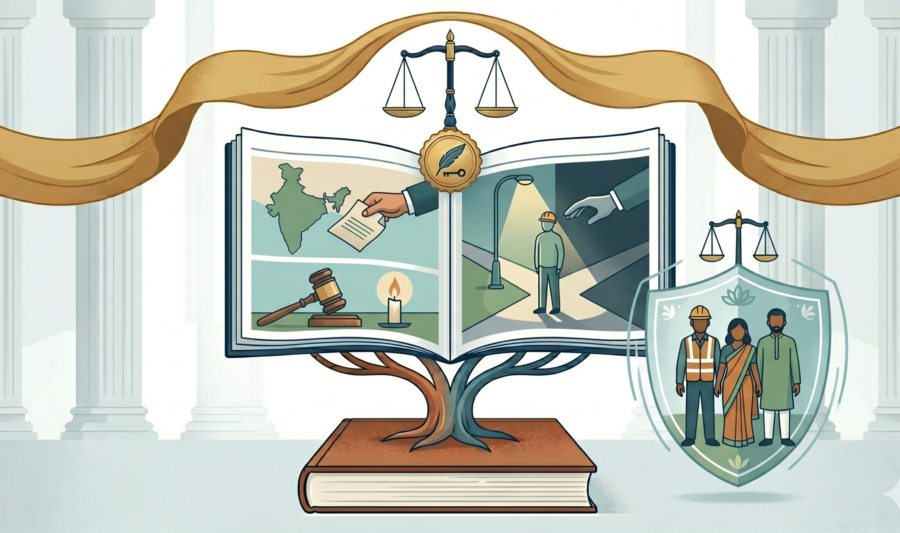
In November 2003, Satyendra Dubey, a young engineer working on India’s Golden Quadrilateral highway project, sent a letter to the Prime Minister’s Office exposing widespread corruption in the project’s execution. He asked that his identity be kept secret. Within days, the letter had been forwarded with his CV attached. On November 27, Dubey was shot dead in Gaya. His killers were never brought to justice in any meaningful sense.
Dubey’s fate was not unique. Manjunath Shanmugam, an IIM graduate who detected petrol adulteration at an Oil Corporation outlet, was found murdered in his car in 2005. Lalit Mehta, who exposed corruption in NREGA implementation in Jharkhand, was killed the day before a scheduled social audit in 2008. These are not coincidences, they are the price that whistleblowers in India have repeatedly paid for telling the truth.
A whistleblower is someone who exposes illegal, unethical, or fraudulent conduct within an organization whether private or public. The exposure may be internal, to management or boards, or external, to media, regulators, or law enforcement. In either case, the risk of retaliation is real and often severe: job loss, harassment, physical danger, and social ostracism.
India’s Whistle Blowers Protection Act of 2011, passed after years of advocacy, was meant to change this. It created a mechanism for complaints to be filed with the Central Vigilance Commission and promised protection from victimization. But the Act was never notified , meaning it never came into force and a proposed 2015 amendment that would have significantly weakened its provisions drew strong criticism from civil society.
Countries like the United Kingdom, the United States, Australia, and New Zealand have developed far more robust frameworks, combining legal protections, anonymous disclosure mechanisms, financial rewards for successful disclosures, and strong anti-retaliation provisions. India’s law, even in its original form, lacked many of these features.
The Supreme Court of India has stepped in where the legislature has not, evolving principles through judgments that affirm the public interest value of disclosure and the state’s duty not to victimize those who speak out. But judicial case-by-case intervention is no substitute for a clear, comprehensive, and enforced statutory framework.
At stake is not just the safety of individual whistleblowers. It is the integrity of governance itself. Corruption thrives in silence. Every time a whistleblower is silenced through murder, threat, or bureaucratic indifference, the rot spreads a little deeper. India cannot afford to keep abandoning the very people who dare to tell the truth.