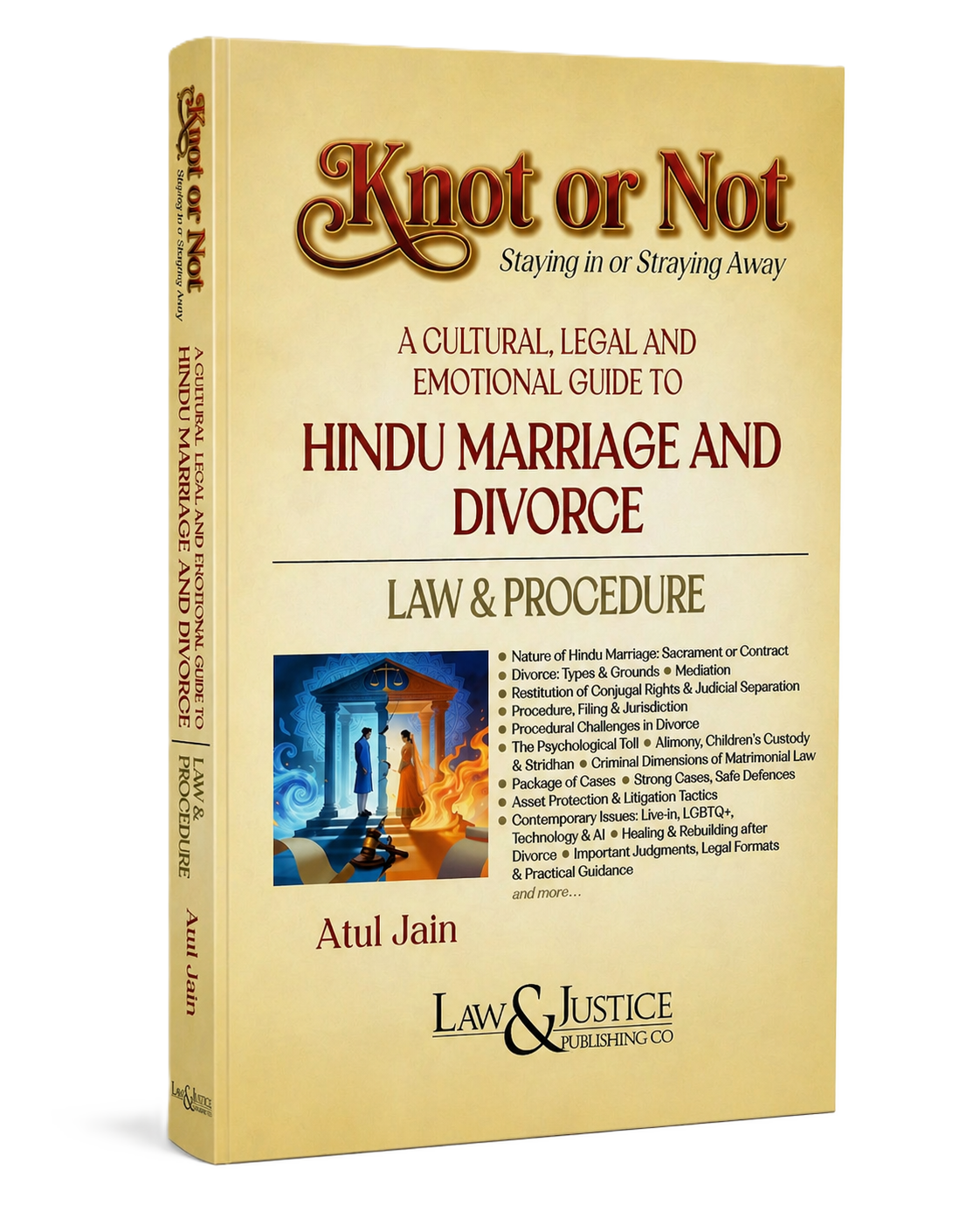
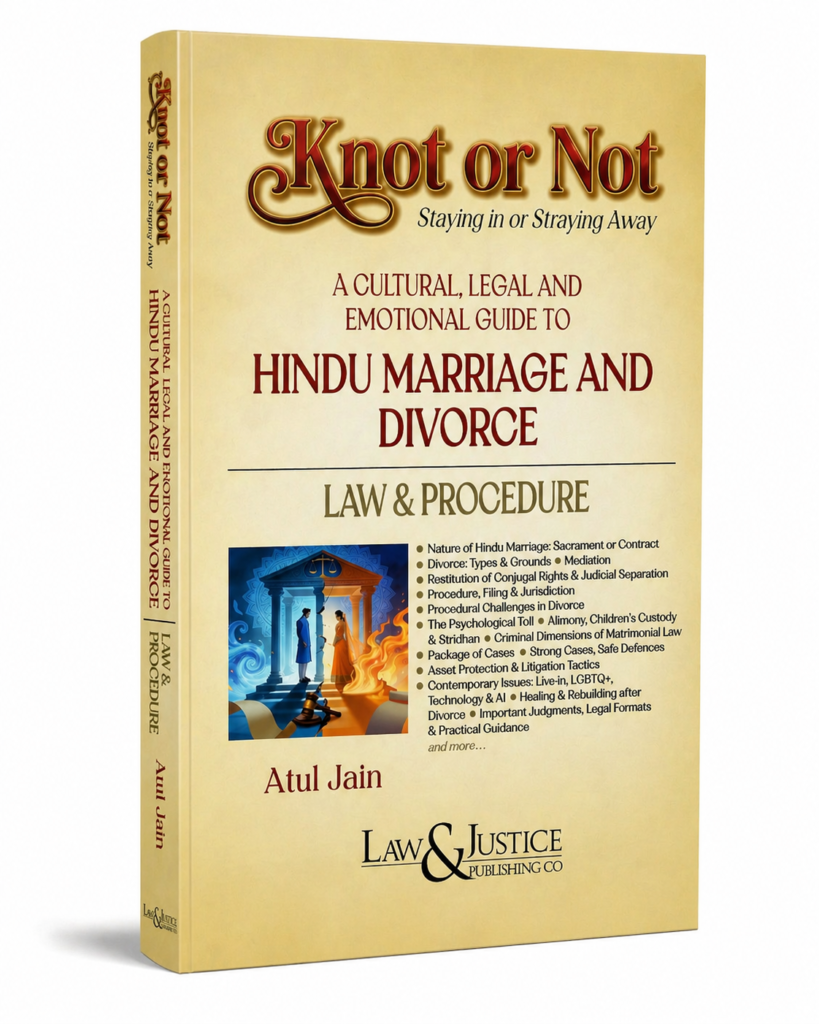
Knot or Not By Atul Jain
Understanding Marriage, Divorce & the Human Side of Matrimonial Law
Knot or Not is a contemporary and insightful exploration of matrimonial law that goes beyond legal theory to examine the human realities behind marriage and divorce. Blending statutory analysis, courtroom experience, fictional narratives, and references from cinema and digital media, the book makes complex legal concepts accessible to judges, lawyers, students, and the general public alike.
- Publication Year - 2026
- English
e-commerce platforms
The law relating to marriage and divorce occupies a distinctive and sensitive space within the legal system. It is an area where statutory provisions intersect with human emotions, social realities, evolving moral values, and rapidly changing technologies. Matrimonial law, perhaps more than any other branch of law, demands not only legal precision but also empathy, balance, and an understanding of the lived experiences of those who approach the courts in search of justice.
The very title of this book, Knot or Not, is both unique and evocative. In its simplicity lies depth. It captures the central dilemma that courts, lawyers, and families confront daily—whether a marital bond can continue as a meaningful knot, or whether the law must provide a just, dignified, and humane exit. The title reflects the contemporary realities of matrimonial jurisprudence and distinguishes this work from conventional legal texts.
This book consciously departs from the traditional format of a purely technical legal treatise. It is written for all—Judges, lawyers, law students, and members of the general public. The objective is to bridge the divide between legal scholarship and public understanding. Complex legal principles are explained with clarity and care, without compromising doctrinal accuracy or judicial discipline.
A Modern & Accessible Approach to Law
A distinctive feature of this work is the innovative use of fictional narratives and references drawn from cinema, web series, and OTT platforms as explanatory tools. In an age where public perception of law is increasingly shaped by digital media and storytelling, this approach seeks to demystify legal processes, dispel misconceptions, and make the law accessible to a wider audience. These illustrations serve not as entertainment, but as educational tools to illuminate complex legal issues.
The book engages with a broad spectrum of contemporary challenges confronting matrimonial courts today, including:
- Technology & Artificial Intelligence
- Digital Evidence
- Changing Family Structures
- Live-in Relationships
- Evolving Societal Norms
Matrimonial law does not operate in isolation, and this work acknowledges the rapid transformation taking place in both law and society. Its forward-looking approach ensures continued relevance in a changing legal landscape.
Practical, Human & Legally Rigorous
Rooted in practical courtroom experience and supported by a strong academic foundation, the book seeks to humanise the law without trivialising it. It attempts to balance legal rigour with emotional sensitivity, reflecting a deep respect for judicial institutions and the justice delivery system.
For Judges
Structured statutory analysis supported by relevant judicial precedents.
For Lawyers
Practical litigation insights and legal formats covering a wide range of matrimonial disputes.
For Law Students
A lucid and engaging guide designed to simplify understanding and assist in academic preparation.
For the General Public
Clarity, awareness, and a realistic understanding of the legal consequences of marital breakdown.
Law in a Changing Society
Law is not static; it evolves with societal change, judicial interpretation, and legislative reform. Matrimonial law, in particular, is undergoing rapid transformation. This book recognises that dynamism and aspires to evolve alongside the laws it explains.
Knot or Not seeks to reflect the law not merely as it is written in statutes and judgments, but as it is lived in homes, courtrooms, and society. In answering the question “Knot or Not,” it reminds us that justice lies as much in compassion as in law.